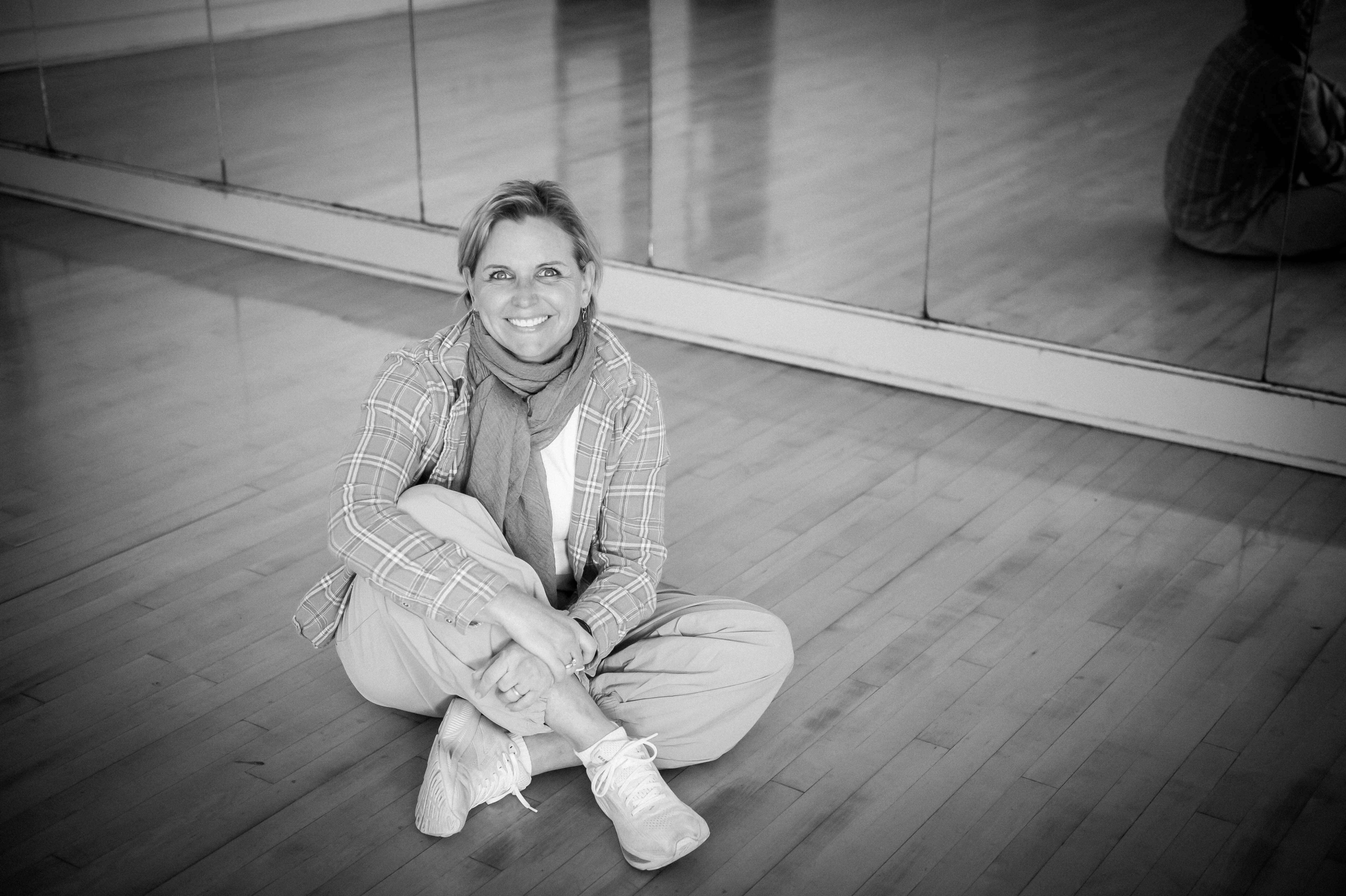



Julie Fitzpatrick — 2026 Spring Events
The Belle of Amherst — Excerpts & Discussion
An intimate performance and conversation exploring the craft of acting through playing the role of Emily Dickinson.
Shirley Valentine — Staged Reading
Directed by Julie Fitzpatrick with the Moses Gunn Play Company.
Acting Classes
Julie teaches Acting for Adults through Legacy Theatre and Shoreline Adult Education. New sessions begin in late March.
Register: legacytheatrect.org/classes
Hey Team — by popular demand, Julie Fitzpatrick is back.
You may remember her from December 2024 when she shared her thoughtful poem An Exit Ramp Appears — an artistic reflection on the end of her marriage. That episode is linked in the show notes, along with everything she’s creating this spring.
Julie is stepping into Emily Dickinson through excerpts of The Belle of Amherst. She’s directing a staged reading of Shirley Valentine, and continuing her work as a gifted acting teacher here in Connecticut.
She is one of those artists who doesn’t just perform — she invites others to find their voice. And that spirit of reinvention, courage, and creative truth is exactly what we’re talking about today.
So without further ado, let’s roll the intro Bill…
Transcript: Confession time Team —This is just a transcript of our conversation and it favors function over perfection. So yes — there will be typos, and moments where the transcript program just gave up. Please read with grace (and maybe your imagination).
Mags: Julie, thank you so much for coming back into the studio.
Julie: You’re so welcome.
Mags: One more time. As I mentioned, the poem you shared with us got some feedback, and people just wanted to know more about your story. So if you could jump into that story wherever you feel comfortable—wherever it feels right.
Julie: Yeah. I think, zooming out from it all, I was married once before my current wonderful marriage, and I was divorced in that marriage. But I actually thought, as I was driving here, that I was divorced a long time before my legal divorce. I grew up in a house—with no intention of throwing anyone under the bus—with a tremendous amount of rage and mental illness. Because of that, I think I disassociated from myself around age nine. I can actually remember when it happened.
From about nine until just recently—I just turned forty-seven—the last several decades have really been a journey to realign.
Mags: Mm-hmm.
Julie: It’s really only in the marriage I’m in now, with the man who has been the single most effective communicator I’ve ever met, that I’ve begun to understand what it means to have a relationship—not just with someone else, but with myself. That divergence happened so early that a lot of my choices after age nine were based on what my head thought was a good idea and what I hoped my body would eventually catch up to.
Mags: Interesting.
Julie: When I look back on my choice of college—honestly, many of my choices—they’re almost laughable when I really think them through. But because of the trauma around me, I didn’t have sounding boards. So I just went with things like, “The sun is shining on the campus, I got in, maybe this will work out.”
The man I married was a really good guy—charismatic, interesting, competent. He brought a lot to the table. The challenge was that we weren’t actually a match for one another.
Mags: Mm-hmm.
Julie: But I thought that could be overridden, especially because he came from a culture where that was often overridden in marriage. I felt red flags early on. They weren’t necessarily personal, although it certainly felt personal during the divorce. Now, when I look back, I’m grateful for the friendship we have and the beautiful son we created.
But I’ll circle back to this advice because I want to share it for anyone who might be at that fork in the road—especially if you have children. The divorce happened because I finally came to terms with those red flags. They had been there for a long time.
If anyone is listening and wondering, Should I or shouldn’t I? I really recommend taking a walk with yourself and doing something I call “whisper talk.” Whisper talk with yourself—or journal—until you reach your barest truth. When we get honest with ourselves, we often already know the right answers.
My former husband and I had a pivot point in our marriage where we realized we had very different views about raising a child. We had to come to terms with that. Because of those differences—and because we weren’t ultimately growing together—the relationship reached a point where something had to change.
Mags: Mm-hmm.
Julie: I don’t think the specifics would serve anyone listening. The biggest takeaway is that we have to be honest with ourselves. And I wasn’t. I could point my finger at him and say he didn’t do this or that, and he could point at me and say the same. And honestly, he would have been right.
But the soil wasn’t healthy to begin with. It wasn’t a well-thought-out choice. So any decisions we made after that original “I do” weren’t wise ones.
Mags: Yeah, and I want to get to that knowing—because I’m so glad you explained that you actually had the knowing before you even entered the marriage. Do you think some of that childhood trauma made you question your instincts?
Julie: Oh, one hundred percent.
Mags: Okay.
Julie: One hundred percent. I questioned my existence. I did what I was told to do because I didn’t want to make anyone mad—or worse. I lived in the space of someone who was mentally ill, and there were suicide attempts. There was a lot of blood, a lot of instability, and moments of disappearance.
So I made myself as quiet as possible. At times, I convinced myself I was a ghost—that if I stayed quiet, I wouldn’t make anyone mad.
Mags: Mm-hmm.
Julie: And this was all in my head, Mags. A lot of it was disassociated. Now, four decades later, I’m trying to piece together what happened—not just with my divorce, but with so many of my choices.
Especially now, as my parents are where they are in life. My mother is declining, and our relationship is shedding light on what was. It’s bringing a lot into focus.
So many of my early choices were based on not wanting to make anyone mad or disappear. Instinct was completely overridden. If I had trusted my instinct in that marriage, I might have said early on, “Let’s date another year,” or “This feels good in some areas and not so good in others—can we explore that?”
But to do that, you need an inner sounding board that says, “This feels right” or “This doesn’t.” And the only place I had that clarity was in the theater. I knew what felt right there. I knew how to learn a script, how to write, how to journal. Those instincts were still alive.
But much of the life around those passions was very blurry.
Mags: I want to go back to the whisper talk, because I don’t think we fully understand what that is. I also found it fascinating that your coping mechanism now is whisper talk, and you mentioned feeling like a ghost as a child. It feels like those things are interestingly connected.
Julie: I’ve never thought of that.
Mags: It’s like now your coping mechanism is quiet reflection. The truth comes quietly because that’s a safe place for you.
Julie: I love that.
Mags: So tell us about whisper talk.
Julie: Well, that might be a bit of an inside secret I just shared. But my family did many things well in terms of presenting ourselves—being welcoming, friendly, using our voices to connect with people. Those were all great things.
The disconnect happened elsewhere. I could speak with adults very early on. I could help manage my brother’s handicaps. I could help my mother with things. But I had trouble understanding what was actually scary versus what was just in my head. I lost connection to what I liked and didn’t like.
Years later, when I was living in New York and doing shows at Ensemble Studio Theatre, I had a practice for memorizing lines. I would write them out and then whisper them to anchor them inside myself.
Over the last year, that practice has come back—but now I whisper the truths that might not be easy to say. My first instinct is often to respond warmly and kindly, which is good, but I want to make sure it’s backed by truth.
So I whisper talk to check in with myself. For example, my husband and I are on the cusp of adoption, and I’ve been whisper talking about those early sleepless days that might be coming. I tell myself, You might not sleep well. This will be challenging. I repeat it so I’m prepared and connected to myself.
It’s really just a way of reconnecting with my inner voice.
Mags: I love that. I think whisper talk invites the internal voice that’s been quieted.
Julie: Exactly.
Mags: It sounds like it’s helping you reconnect with instinct. Because what you once thought was instinct—being kind and accommodating—was really conditioning.
Julie: Yes.
Mags: And now it’s like quietly uncovering the voice that says, “I love you, but this doesn’t work for me.”
Julie: Exactly. And when I whisper talk, sometimes the truth that comes out is actually pretty harsh. But maybe whispering allows me to be honest without performing for anyone else. It’s just ground level truth.
When I reached that place in my first marriage, I could finally say the word “I.” First we have to confess things to ourselves. Then we have to say them out loud.
We had tried everything—therapy, separation. But at the end of the day, we were still facing away from each other. That’s when I said, “This needs to end so we can both thrive.”
We were wilting. We weren’t blooming.
Julie: And when I whisper talk, sometimes the truth that comes out is actually pretty harsh and intense. But maybe you’re right—maybe whisper talk is my way of making sure I’m not presenting for anyone else. It’s just bare truth. Ground level.
When I got to that point in my marriage, I was able to say the word I. I think first we have to say things to ourselves. We have to confess to ourselves what’s not working, and then we have to dare to say it out loud.
We had tried everything. We tried therapy, we tried separation—different versions of both. But at the end of the day, neither of us was facing toward the other.
Mags: Mm-hmm.
Julie: We were still facing away. And eventually I had to say, “This needs to end for us to thrive in our individual lives.” Because we were wilting. We were not well. We were in a dark place.
And I could have pointed fingers at him or at myself, but really it came down to this: we were not going to bloom there.
Mags: Yeah.
Julie: When people asked what helped and what didn’t help during that time, one thing that didn’t help was someone telling me, “Get a shark.”
What she meant was, get a shark of a lawyer.
And my quiet voice—the one I was just beginning to reconnect with—immediately said, I don’t like sharks. That doesn’t feel right to me.
But I was overwhelmed with all the legal pieces of divorce. We had a really ineffective mediator for a while, and then my former husband got a shark lawyer. For a moment I thought maybe I needed a shark to battle another shark.
But that didn’t feel right to me.
So instead I found a woman who was not a shark. I still reach out to her every year just to thank her. She helped create something that worked for both of us and for our child.
The whole shark mentality was about making custody agreements cutthroat, and that didn’t make sense for us—especially for my former husband, who has a very different relationship with time and schedules.
Putting him on a rigid schedule wouldn’t have worked for him, and it wouldn’t have helped our son. So I would never advise someone to just “get a shark.” I would say: get support that works for you and for both people involved.
If it doesn’t work, change course if you can.
What did help were my friends, Mona and Danielle. I could get emotional just thinking about it. They helped me move out of New York City during that time. It wasn’t a pretty situation. It was evening. My son was four. And I was trying to pack up a life.
They rode the elevator up and down with teapots, boxes, little items—whatever they could carry. I was stuffing everything into my trusty Ford Escape while they helped manage my son.
They helped me get onto the Merritt Parkway. They helped me move forward.
Those concrete acts of help mean so much when life feels like the floor has disappeared beneath you. So if you can help someone move, or hold a child’s hand while their parent is going through this, do it.
Mags: That’s great feedback. But I’m curious about the lead-up to that moment.
Had you already decided to move, or did your friends kind of sense that you needed help to actually make it happen?
Because from my experience with friends going through divorce, they’re exhausted. It’s mentally draining. They’re taking in everyone’s opinions, there’s embarrassment, confusion, that voice saying I should have known.
It’s a mountain of heaviness. And sometimes friends can see that a decision needs support—but it’s hard to know whether stepping in is helpful or pushy.
Julie: That’s such a good point.
Mona lived on our hallway in the building, and Danielle came over often. They had seen the separations. They knew this was coming. It wasn’t a surprise.
But the part that wasn’t planned was my relationship to leaving New York.
I had this inner voice saying, You can’t leave New York.
I had moved so many times in the city—sublets, actor apartments, constantly shifting spaces. That fifteen or sixteen years was exciting but also chaotic and structureless.
Then I had tried to build a family there through my marriage, which ultimately didn’t work. So the challenge wasn’t the decision itself—it was getting my body to move forward with it.
Mona and Danielle carried things out one box at a time. One item at a time.
Mags: Right.
Julie: It was almost like they were helping my body catch up with the decision my mind had already made. I knew it was the right choice, but I didn’t know what I was walking into—or fully what I was leaving behind.
Mags: Mm-hmm.
Julie: So I just kept moving forward, step by step.
Mags: And then these two magical angels help you take that step you needed.
Julie: Exactly.
Mags: What did the rebuilding look like after that?
Julie: I think everyone’s post-divorce story could fill multiple podcasts. But for me, rebuilding looked very different than I expected.
I was exhausted. Emotionally crooked inside, honestly. My priority was creating some kind of economic ground for me and my son.
My family has a car business, and my father had always encouraged me to join it. He would come see a show I was performing in and say, “Great job. You know where those skills could really be useful? The car business.”
Mags: Beautiful performance—let’s get you on the showroom floor.
Julie: Exactly.
So eventually I took him up on it. He was thrilled—and still is. I still work there today.
Over time I also began teaching theater and performing occasionally again. But in the beginning, rebuilding was about the basics: getting an apartment, finding a school where my son felt comfortable, and making sure he saw his dad regularly enough that his world didn’t feel completely shattered.
He was four, but he’s incredibly bright. I’ve always talked openly with him, though gently, about that time.
One thing that really stayed with me came from a family friend who had been divorced and had six children. She told me: “My children are fifty percent their father. I never speak badly about him around them. Because if I do, I’m telling them their own DNA is flawed.”
That really stuck with me.
It took everything in me sometimes to bite my tongue, but I honored that advice. And I’m grateful for it.
Today my former husband and my current husband actually have a good relationship, which I’m incredibly thankful for—especially for our son.
The rebuild was practical at first: routines, housing, work. But personally, journaling was huge for me. Spending time in nature helped a lot too.
Eventually, I met my current husband. I had never imagined I’d get married again. But we started as friends—bonding over the fact that we had both recently been divorced.
And suddenly I found myself with someone who spoke honestly, loudly, directly. I had never experienced that before.
Much of my life had been internal. Quiet. And here was someone who spoke truth openly, and we could dialogue about it.
We built a life together.
So if there’s one thing I’d say about rebuilding, it’s this: reconnect with yourself first. That might sound cliché, but it’s real.
Take care of yourself. Don’t rush the process. Sit by the ocean if you need to. Get help if you need to.
Divorce is incredibly painful—but sometimes it’s also necessary to live a truthful life.
A life where you’re not fraudulent with yourself.
Mags: Mm-hmm. Where you’re blooming.
In the divorce process, there’s so much focus on the relationship itself. And then suddenly it’s over. But taking the time to ask, What did I lose of myself? or What was always missing?—that’s so important.
And I think that’s a big part of your story. There was so much that wasn’t there yet, and you really had to give that voice.
Julie: Mm-hmm.
Mags: It sounds like you were able to do that, but it’s slow, right?
Julie: Yep.
Mags: A slow process.
Julie: Yep.
Mags: One day at a time. And now I see you riding bikes with your kids.
Julie: Scooting by.
Mags: Exactly. And I’m sure when your child was four years old, that was not the future you envisioned.
Julie: Oh, it really wasn’t, Mags. That’s such a good point. Helmets, bikes, adoption, growing our family, silliness—none of that was what I pictured at that time.
Back then it was so intense that some days I was just thinking, I should probably shower at some point today. That was the level of survival mode I was in.
Now it’s things like watering the plants. And that feels glorious.
Mags: It’s funny because as you’re talking, I’m picturing your beautiful gardens. And I think that’s actually the perfect place for us to end.
Your story is literally and figuratively full of blooms. And the fact that you’re still taking time to water those blooms—sometimes watering means staying and working through something, and sometimes watering means moving on.
So Julie, thank you so much for coming in today. It’s been really wonderful getting to know more about you, and I know our listeners wanted to hear your story.
Thank you for taking the time to share it.
Julie: Thank you. And thanks everyone for listening. Take care of yourselves.
Welcome to my blog turned podcast! Here you can listen or read about what’s on my mind as I try my best to recover from screaming at my kids and nagging the bejesus out my husband.
Join TeamConfessions, a.k.a. "TeamC"—the posts are super short—you’ve got this.

| Website by Crearé Web Solutions |